Water Damage Drying
Wet Basement or Sewer Backup in Hoboken? Dry It Before It Becomes Mold
Water on your basement floor, or a drain that backed up in the rain? Call now, because the clock matters. The EPA says wet materials should be dry inside 24 to 48 hours if mold is to be kept from starting. Say where the water came from, and a local contractor is connected to dry or clean it.
- Two companies, never oneThe assessor and the remover are separate firms.
- Findings on paperAsk for the scope and the cost on paper.
- Local to the Hoboken areaHelp for Hoboken and the towns around it.
We arrange your mold assessment and the removal. Two separate local companies do the work, and we do neither.
Tell us what you are seeing
Your name, a number and a ZIP code get you started. Add the wall, the smell or the water if you can.
The Mold Removal Hoboken pledge
- Asking for help costs nothing and commits you to nothing.
- We take no fee for planning or the introduction.
- We send one company to test and another to remove.
- Your $100 credit is honored exactly as the Terms say.
Your contract with the contractor covers the work itself.
Fits when you see this
It is the rain, not the river
The ANSI/IICRC S500 standard puts sewage and waste line backflow in Category 3, meaning grossly contaminated, however clear the water looks.
Basis: IICRC
Questions about this job
Is a sewer backup different from an ordinary leak?
How long before wet material grows mold?
Can wet drywall be dried in place?
Water came through a shared wall. Who do I tell?
My basement only smells damp in summer. Is something leaking?
Who pays for drying in a rented unit?
Can I just run a dehumidifier myself?
How do I protect the room until a contractor arrives?
What the work covers
Pulling out standing water
Basements, garden level units and ground floors are cleared first.
Naming the water category
Clean, grey or contaminated decides everything that follows.
Removing soaked porous material
After a backup, it is carried out instead of dried.
Structural drying
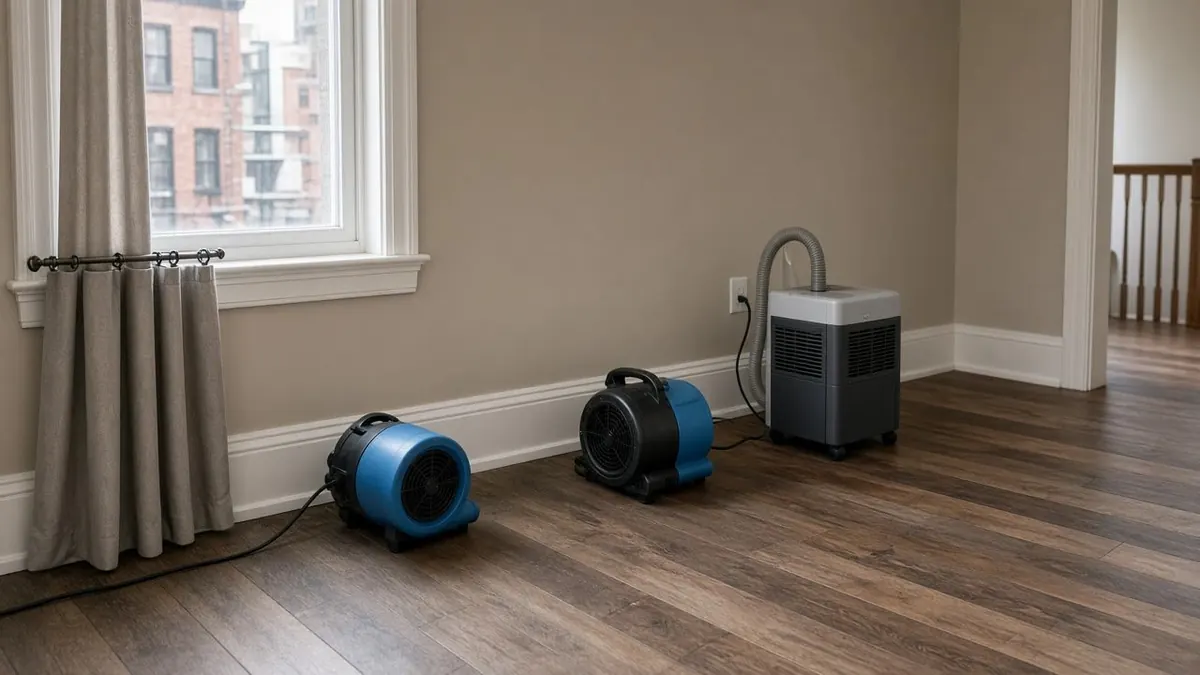
Air movers and dehumidifiers run to a measured target, not to the touch.
Daily readings on paper
Ask for the daily readings so you finish with a number you can show a landlord.
Up or down: the question that comes first
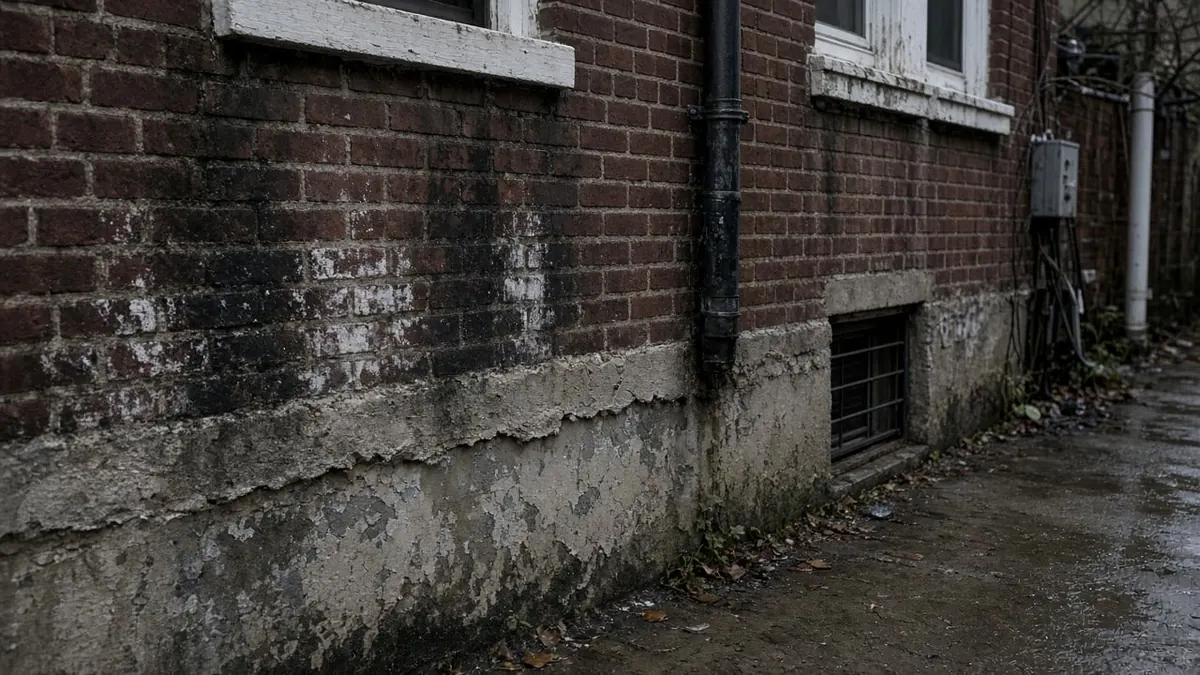
Where the water entered decides the job. Water that came down from a roof or a pipe is one thing. Water that rose out of a floor drain is another, because in a combined sewer one pipe carries wastewater and stormwater together.
Sewage in the water adds cleaning and decontamination steps, according to the Department of Health. Tell us which way yours came, and we say what that means for the job.
What the first two days decide
Beat the EPA's 24 to 48 hour drying window and you may never have a mold job at all.
If you miss it, an assessment is the sensible next step. Call before you spend a day waiting for the water to go down on its own.
Why one Hoboken block floods and the next does not
Two USGS readings in Hoboken differ by about 14 feet, from the low southwest streets near Observer Highway up toward Washington Street. The City says an hour with 0.8 inches of rain is enough to swamp its sewers.
Five new pumps were announced for ResilienCity Park in April 2025, but a pump at the park does not keep a backup out of your own building. Ask your neighbors what the building has been through, and tell your contractor.
A damp basement in July with no leak
At Newark Liberty airport in Essex County, the July 15 dew point normal runs about 62 to 64 degrees all day. Any basement wall cooler than that collects moisture straight from the air.
If that is your problem, a dehumidifier may beat a restoration visit. Buy a hygrometer first, watch the reading for a week, and tell us what it shows.
Shared buildings and who needs your record
Water in a Hoboken building often arrives through someone else's pipe or common element. Tell us who your landlord, board or management company is when you call.
Your dated readings and photographs matter to them and to any insurance claim. In a condo, check your bylaws for who handles water that crosses a unit line, and ask the board to confirm it in writing. Send them the record as soon as you have it.
What you should hold in writing
- A water source note Where it came from and which category.
- Daily moisture readings Dated numbers, start to finish.
- Dated photographs Before, during and after.
- A handover note If drying missed the window, the reason is on the record.
How the job runs
- 1
Say where the water came in
Up through a drain, down from a roof or unit above, or out of a supply line. This sets the category.
- 2
Stop the source and pull the water
Shut off a burst line, then extract what stands. Photograph the room with dates first.
- 3
Dry or remove, by category
Clean water gets dried. A backup gets cleaned, and soaked porous material goes out.
- 4
Read the numbers
If drying reached the target, you stop there. If not, an assessment comes next.
What moves the price
- The amount of water, and for how many hours it has stood.
- Whether the water was clean or came up a drain.
- What lies under a wet floor, because layered flooring holds water between layers.
- How many rooms and how much wall cavity have to be dried.
- The days the drying equipment must run before readings hit the target.
- Each contractor sets their own price. Ask for it before you say yes.
Your first booking carries a $100 credit.
- We pay the credit; the contractor's price stays the same.
- Limit of one credit for each customer and each property.
- Expires December 31, 2026.
- Your contractor sets the job price.
The Mold Removal Hoboken pledge
- Asking for help costs nothing and commits you to nothing.
- We take no fee for planning or the introduction.
- We send one company to test and another to remove.
- Your $100 credit is honored exactly as the Terms say.
Your contract with the contractor covers the work itself.
Mold Removal Hoboken, (315) 640-3590 Read the full wording
Where this job is available
Hoboken and the waterfront
The Palisades ridge
The Meadowlands side
Book through us and get $100 off your first job.