Guide
Why Two Mold Quotes Differ, and How to Compare Them
One contractor quotes your moldy wall at one number and another quotes a very different one. Both may be honest. This guide shows what moves a mold price near Hoboken so you can ask the right questions before you sign.
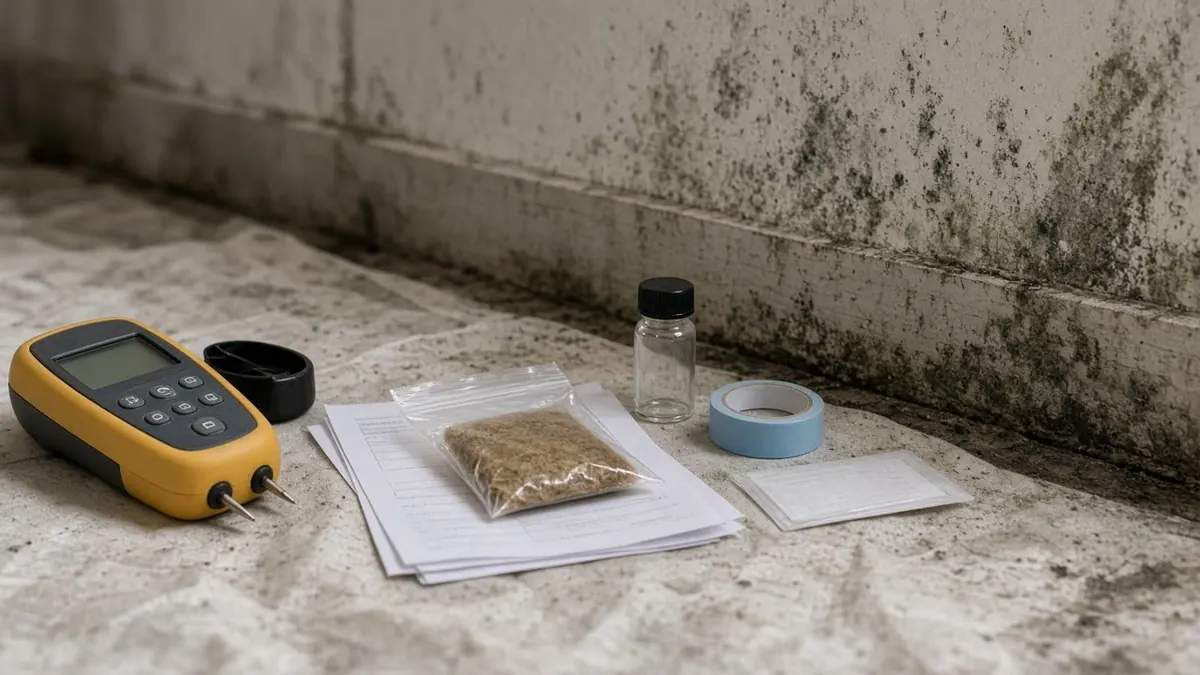
Why nobody can name your price yet
A real number comes after somebody measures. Until then, any figure is a guess about the area, the material and the water. We do not set prices. Each contractor prices their own work, and you sign with them.
What we can do is get the findings written first, so every quote is built on the same facts.
Basis: IICRC, NJ Department of Health
Where the water came from
This changes the job more than most other things. Water from a supply line is clean and may dry in place. Water that came up a drain falls into the grossly contaminated class under the industry standard, whatever it looks like.
The Department of Health says sewage changes the job, adding cleaning and decontamination steps. Ask each contractor to show those steps as their own line, so you can see what you are paying for.
Basis: U.S. EPA, NJ Department of Health
What the wet material is made of
Porous items like carpet and ceiling tile can be a loss once mold sets in, the EPA says, because growth reaches into them and may not come out.
Tile on masonry gets cleaned where it stands. Drywall, carpet pad and batt insulation go out in bags. Ask your assessor to list which of each you have, because disposal is priced.
How big the area measures
The measured area sets how much containment, labor and disposal the job needs. The Department of Health draws rough lines at about 10 and about 100 square feet, with a professional opinion for sizes between.
Measure your patch with a tape before you call. A number you can say aloud saves a visit and sharpens the first answer you get.
How hard the space is to work in
Where the bags go and where the machines sit are priced, and stairs, a shared hall and street parking change both.
Tell every contractor about stairs, parking and building rules, and ask how each one changes the price.
Whether anyone has to be told first
In a one or two family home, replacing interior finish on less than 25 percent of a wall counts as ordinary upkeep and needs no permit or notice. In larger buildings, minor work needs a permit, though work may begin once the local enforcing agency has been notified.
Ask which case you are in. If paperwork applies, it should appear in the quote, not arrive later.
The rebuild is a second job
Closing and finishing the wall is its own work: insulation, drywall, paint and trim. Ask whether the quote includes it, and who does it. Rebuild should follow the drying readings, not run beside them.
Before you sign, remember the cooling-off period: you can cancel a home improvement contract until midnight on the third business day. Read first, and keep proof of any cancellation notice.
Why a written scope lowers the risk
When every bidder prices the same scope, the differences between quotes come from price and method, not from different guesses about the wall. That is the fair way to compare. It also shows you which contractor has read the findings and which has skimmed them.
Whether a test was needed at all
If growth is visible, the Department of Health says extra testing is not needed. Money spent on a sample you did not need is money not spent on the water repair. Ask what each test would decide.
When drying is the whole job
Some jobs never reach removal. If water is dried within the first day or two and the readings reach their target, there may be no mold work to price at all. That is the cheapest outcome, and it depends on how fast you call.
If water is still arriving, start with drying and come back to the rest after.
The lowest quote is not always the lowest bill
A quote that leaves out containment, disposal or the water repair can look cheap and grow later. Count what is missing before you count what is listed. A line you cannot find is a cost you may meet on the day.
Ask each contractor to name anything they have left out and what it might cost. Write the answers next to the quote.
Questions to put to each contractor
- Is every line of the written scope in your quote?
- What is not included, and what could it cost?
- Who handles notice to the building or the town, if any is due?
- Who does the rebuild, and when?
- What happens if you open the wall and find more?
The last question matters in older Hoboken buildings, where an opened wall can show an earlier water history. A contractor who has thought about it will tell you how a change gets priced and agreed. Ask for that in writing too.
Ask how and when you pay
Ask when payments are due and what each one covers. Be careful about paying the full amount before work starts, and prefer stages tied to finished steps. Write the schedule into the contract.
If a contractor asks for cash on the day, ask for a written receipt that names the work.
How to compare quotes this week
- Get the written scope from a company that is not bidding.
- Send the same scope to each contractor.
- Ask for each quote itemized by area and by step.
- Ask when the water repair happens and who does it.
- Choose the quote you can read line by line.
Tell us your block and what you see. We arrange the assessment first, then introduce local contractors to price against it.
Your first booking carries a $100 credit.
- We pay the credit; the contractor's price stays the same.
- Limit of one credit for each customer and each property.
- Expires December 31, 2026.
- Your contractor sets the job price.
The Mold Removal Hoboken pledge
- Asking for help costs nothing and commits you to nothing.
- We take no fee for planning or the introduction.
- We send one company to test and another to remove.
- Your $100 credit is honored exactly as the Terms say.
Your contract with the contractor covers the work itself.
Mold Removal Hoboken, (315) 640-3590 Read the full wording
Send us the scope or the wall, and we help you compare.